
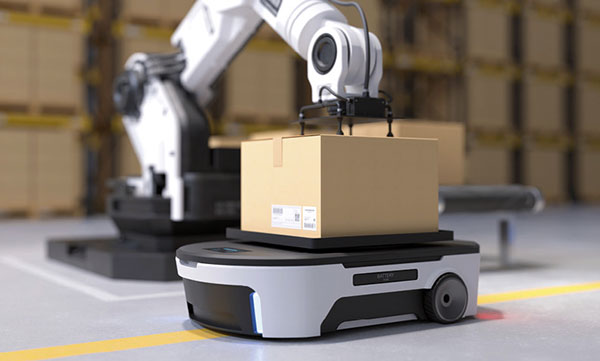
Global investment in warehouse automation is expected to accelerate sharply over the next decade as operators respond to rising e-commerce demand, labour shortages and increasing supply chain complexity, according to new analysis from Polaris Market Research.
The report estimates the global warehouse automation market was valued at US$23.97 billion in 2024 and projects it will reach US$119.79 billion by 2034, representing compound annual growth of 17.5%.
According to the report, accelerating e-commerce demand, labour shortages and advances in artificial intelligence (AI), robotics and Internet of Things (IoT) technologies are continuing to reshape warehouse and logistics operations globally.
The analysis highlights growing adoption of technologies including automated storage and retrieval systems (AS/RS), autonomous mobile robots (AMRs) and warehouse management software designed to improve throughput, inventory accuracy and supply chain coordination.
Labour availability is also identified as a major driver behind automation investment.
“Warehousing operations traditionally rely on manual labour for tasks such as picking, packing, and material handling,” the report states. “However, increasing labour costs and workforce constraints are pushing organisations to adopt robotic and automated solutions.”
The report suggests AI and IoT integration are playing an increasingly important role in the shift toward more connected and data-driven warehouse operations. AI-powered systems are being used for predictive analytics, demand forecasting and operational decision-making, while IoT-enabled devices provide real-time monitoring of inventory and environmental conditions.
Advanced warehouse facilities dominated the market during 2024, driven by large-scale e-commerce and third-party logistics operations adopting robotics and real-time data systems. However, the report notes mechanised warehouse systems are expected to see strong growth as mid-sized businesses increasingly invest in more accessible automation technologies.
Sector demand is also broadening beyond retail and logistics. Pharmaceutical operations are expected to experience some of the strongest growth due to increasing requirements for precise inventory management and handling of sensitive products. Food and beverage, grocery and apparel sectors are also identified as key growth areas for warehouse automation technologies.
While North America currently represents the largest warehouse automation market, the report forecasts Asia Pacific will experience the fastest growth over the coming decade, supported by industrial expansion, e-commerce growth and investment in smart logistics infrastructure.