
Electric forklifts built for tomorrow’s operations
As rising fuel costs and sustainability expectations reshape the operational landscape, many New Zealand businesses are rethinking how they power their material-handling fleets. Increasingly, electric forklifts are emerging not as a compromise, but for many as a smarter, more capable way forward.
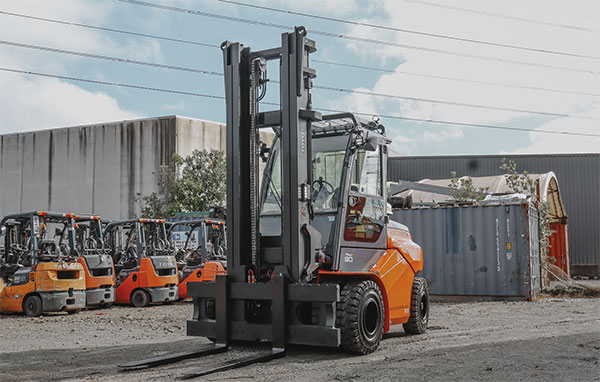
Toyota Material Handling, supported nationwide by heavy equipment specialist AB Equipment, says it is driving this evolution with its latest range of high-capacity electric counterbalanced forklifts. Headed by models such as the Toyota 9FBM80T, the range demonstrates that electric technology can deliver the strength, control and dependability required in demanding industrial environments, alongside the quality and reliability expected from Toyota.
The perception of electric forklifts has changed significantly in recent years, says Niall Farrell, general manager, sales and operations at AB Equipment Material Handling Division. Once considered limited to light-duty indoor use, advances in motor performance, battery systems and environmental protection have enabled electric machines to move confidently into heavy-duty applications.
“Electric forklifts have evolved to the point where they’re no longer an alternative, they’re a primary solution. For many applications, they now outperform diesel when you look at the full picture, not just power, but cost, control and long-term value,” says Farrell.
This shift is evident in high-capacity models such as the Toyota 9FBM80T 8-tonne electric forklift, designed to combine heavy lifting capability with the refined control of electric drive systems.
Performance and durability
From the moment the wheels turn, performance stands out, says Farrell. Instant torque delivers smooth, responsive acceleration, allowing operators to handle heavy loads with precision and confidence. Even at higher capacities, power delivery remains controlled and predictable, supporting both productivity and safe operation across busy worksites.
Unlike diesel forklifts, which rely on engine speed to generate power, electric forklifts provide immediate response. This improves efficiency and enhances operator confidence when working with large or awkward loads.
“The feedback we get from operators is always around control,” Farrell says. “Electric machines feel precise and predictable. That makes a real difference when you’re working at height or handling heavy materials.”
Modern electric forklifts are also engineered for real-world conditions. IP54-rated motors provide protection against dust and moisture, making them suitable for industries such as recycling, timber processing, manufacturing and waste management.
“Durability has been a major focus,” says Farrell. “With IP54 protection, these machines are built to handle the realities of industrial sites, dust, fibres and moisture, without compromising reliability.”
In practical terms, that has widened where electric machines can operate. They are no longer confined to controlled warehouse environments and are increasingly being specified for applications where exposure to debris, fibre and variable conditions is part of daily operation. Sectors such as timber processing, recycling and waste handling now expect consistent performance despite contamination and harsher working conditions.
That shift is influencing how businesses assess fleet options. Electric equipment is no longer ruled out early, but considered alongside, and often in place of, internal combustion machines across a broader range of applications.
Cost and operational efficiency
While performance is critical, cost remains a key driver behind the transition to electric forklifts, particularly in the current fuel environment.
Diesel and LPG prices have become increasingly volatile, creating uncertainty for businesses managing operating costs. Electric forklifts remove this variable, replacing fuel with electricity, which is typically more stable and often lower in cost.
“Fuel is one of the biggest ongoing expenses for any fleet,” says Farrell. “When you switch to electric, you remove that volatility. Electricity is far more predictable, and in most cases significantly cheaper.”
The benefits extend beyond energy. Electric forklifts have fewer moving parts than internal combustion machines, reducing servicing requirements and lowering maintenance costs.
“There’s no engine oil, no fuel filters and fewer wear components,” Farrell says. “That simplicity translates into lower servicing costs and more uptime.”
Across the life of the machine, those factors begin to shift the cost equation. While the upfront investment can be higher, reduced fuel spend, lower servicing requirements and improved uptime contribute to a more favourable total cost of ownership over time. For many businesses, that longer-term view is becoming a more consistent driver in fleet planning.
Battery flexibility also supports operational efficiency. The 9FBM80T offers single, multi-battery or lithium options, allowing businesses to match configurations to workload and shift requirements.
“With the right setup, swapping batteries is quick and straightforward, allowing businesses to maintain productivity without long interruptions. With lithium, there is no battery exchange, you can opportunity charge during breaks.”
Operator comfort and safety
Operator wellbeing plays a significant role in productivity and retention. Farrell explains that electric forklifts offer clear advantages in this area.
Toyota’s full floating cabin design reduces vibration and operator fatigue over long shifts. Electronic power steering, shock-less landing and intuitive controls support smooth operation, while enclosed steel cabins with integrated air conditioning provide a consistent working environment.
“Comfort directly impacts performance. When operators are less fatigued, they’re more focused, more accurate and more productive.”
Electric forklifts also operate at lower noise levels, contributing to quieter worksites.
From a safety perspective, electric drive systems provide consistent acceleration and deceleration, reducing the risk of sudden movements and improving load stability.
“Electric gives you a level of precision that’s hard to achieve with diesel. That control translates directly into safer operation.”
Environmental and compliance benefits
With zero emissions at the point of use and reduced noise, electric forklifts contribute to cleaner, more efficient worksites while supporting environmental goals.
“More organisations are looking at how they can reduce emissions without compromising performance. Electric forklifts offer a practical way to achieve that.”
Future proofing operations
Toyota’s electric counterbalanced range now spans from one to eight tonnes, providing a scalable alternative to internal combustion forklifts across a wide range of applications. This allows businesses to standardise fleets and streamline operations.
“The range now covers everything from light to heavy-duty applications. That flexibility is a big advantage for businesses looking to transition to electric across their fleet.”
Operational requirements are also shaping how equipment is specified. Battery configurations, including multi-battery setups and lithium systems, allow fleets to be aligned with shift structures and workload demands. In higher utilisation environments, maintaining uptime across multiple shifts without extended downtime is a key consideration.
“With the right setup, operations can keep moving without interruption,” says Farrell. “Whether that’s through battery changes or opportunity charging, it’s about making sure the equipment supports the way the business actually runs.”
Taken together, these developments are changing how electric forklifts are positioned within the wider material handling landscape. Rather than being viewed as a direct replacement for internal combustion machines, they are increasingly part of a broader equipment strategy, where performance, operating cost and application requirements are balanced.
Backed by Toyota’s commitment to safety, innovation and continuous improvement, and supported nationwide by AB Equipment, businesses have access to a range of proven material handling solutions that can be matched to specific operational needs.
For New Zealand operations, the focus is now less about choosing between technologies, and more about selecting the right equipment for the job, with an emphasis on efficiency, reliability and long-term performance.
Sponsored content: For more information phone 0800 30 30 90, email info@abequipment.co.nz or visit www.abequipment.co.nz.