
Warehousing and logistics are no longer support functions quietly sitting behind New Zealand business. They are increasingly shaping how companies operate, scale and compete, influencing everything from production flow to customer delivery performance.
Across sectors, pressure is building. Labour constraints, rising throughput demands and tighter service expectations are forcing businesses to rethink how product moves through their operations. The conversation has shifted from incremental improvement to structural change, with automation now sitting at the centre of that discussion.
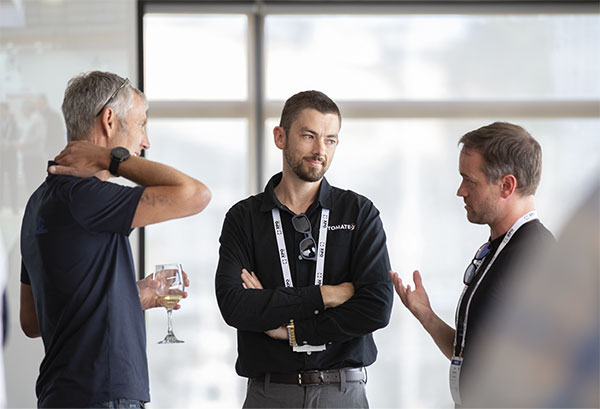
That shift was evident at the recent launch of Logistics Automation New Zealand Powered by CeMAT, organised by XPO Exhibitions in partnership with Hannover Fairs, where more than 100 industry professionals gathered in Auckland to explore how automation is moving from concept into operational reality.
The invite-only event brought together industry professionals and operational decision-makers from organisations such as Fonterra, Foodstuffs, Beckhoff, The Warehouse Group and Briscoe Group. The turnout pointed to a sector moving beyond early adoption and into practical implementation, driven by the need for more efficient, scalable and resilient operations.
“The strong turnout and enthusiastic response to the launch event highlight an industry ready to accelerate its adoption of automation, with the timing ideal to bring end users and solution providers together,” says Stephen Lakey, chair of the Australasian Supply Chain & Logistics Association (ASCLA). “Events such as Logistics Automation New Zealand are essential in helping organisations navigate the wide range of available technologies, as well as the complexities of integration and change management.”
A defining element of the launch was its focus on real-world application. Rather than positioning automation as a future concept, the event was built around live examples, giving attendees the opportunity to see systems operating in working environments.
At Bluebird Foods, part of PepsiCo, visitors were taken through the company’s automated storage and retrieval system, demonstrating how automation is being applied in a high-volume production environment. The system supports improved storage density, increased throughput and more consistent operational performance, particularly where production volumes and product flow place pressure on traditional warehousing models.
For food and beverage manufacturers, the implications are direct. As production demands increase and downstream expectations tighten, the integration between processing and fulfilment becomes more critical. Automation is no longer confined to distribution centres; it is increasingly part of how manufacturers manage output, efficiency and reliability.
A second tour at DHL Supply Chain’s new Auckland life sciences and healthcare facility provided a complementary perspective. The site, featuring a Geek+ robotic system deployed by Automate-X, highlighted how robotics and software are improving accuracy, speed and consistency in highly controlled supply chain environments. While operating in a different sector, the underlying drivers – precision, reliability and scalability – mirror those faced across multiple industries.
Across both visits, a consistent message emerged: automation is moving from concept to operational requirement. Discussion throughout the launch reflected a shift in thinking, with businesses now focused on how systems are integrated, managed and scaled, rather than whether they should be adopted.
For organisers, that shift is central to the purpose of the event.
“It’s time to seismically shift the dial for logistics and supply chain performance in New Zealand, for businesses large and small,” says Brent Spillane, managing director of XPO Exhibitions. “This isn’t just the launch of a new expo, it’s a conversation that New Zealand businesses need to be having right now about productivity, competitiveness and how technology is applied in real operations.
Technology only creates value when the people who build systems connect with the people who need them.”
That focus on connection is reinforced through the involvement of CeMAT, the international intralogistics trade fair brand operated by Hannover Fairs, which brings global perspective and presence to the event while maintaining a local focus on application.
“To understand why this event is significant, you need to understand what’s happening globally, and the picture is extraordinary,” says Mike Nissen, commercial director of Hannover Fairs. “Around the world, the intralogistics and warehouse automation industry is booming. For the first time, New Zealand businesses will be able to see, touch and engage with these technologies right here at home, without the need to travel to Melbourne, Sydney, Shanghai or Hannover.”
Industry partners also see the launch as addressing a gap in the New Zealand market.
“New Zealand has its own intralogistics expo,” says Jordan McFall, co-owner of Automate-X. “Kiwi businesses are showing a strong level of interest in warehouse technology and automation, and events like this showcase what is already being applied. It provides an opportunity to connect, share knowledge and keep the conversation moving.”
Beyond the technology itself, the launch highlighted a broader shift in mindset. Automation is no longer being considered as a future investment, but as a current business decision shaping how organisations manage labour, efficiency, service performance and growth.
Logistics Automation New Zealand will debut at the Auckland Showgrounds on November 10–11, 2026, bringing together suppliers, integrators and end users in a dedicated event focused on practical application and industry connection.
Sponsored content: For more information or to register visit www.logisticsautomation.co.nz.