
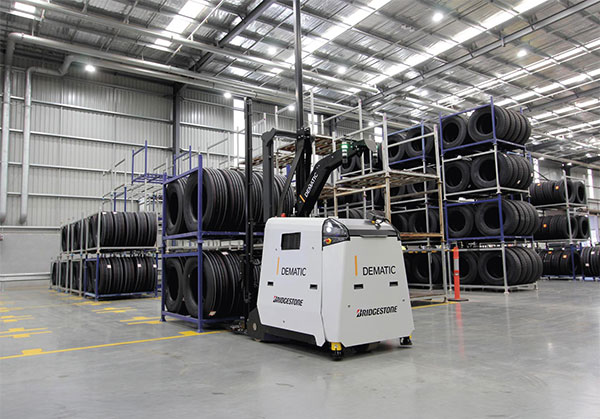
The perfect partnership for smarter, safer warehouses
In today’s fast-paced logistics landscape, modern warehouses are embracing automation to overcome labour shortages, boost efficiency, and enhance safety. automated guided vehicles (AGVs) are rapidly becoming indispensable in these environments, seamlessly complementing human-operated forklifts to create a balanced, high-performance system.
AGVs are programmed vehicles that follow predetermined or dynamically set routes to transport goods within a facility.
“Traditionally, they were used solely for moving heavy loads like pallets, but technological advances have blurred the lines between AGVs and autonomous mobile robots (AMRs). Today, some AMRs can handle heavier loads, while AGVs continue to deliver predictable, efficient pallet movements,” says Tony Raggio, general manager sales – ANZ mobile automation, Dematic.
Their ability to operate 24 hours a day, seven days a week makes them especially valuable in multi-shift operations where reducing labour costs and maximising uptime are crucial.
Complementing forklift operations
Despite the impressive capabilities of AGVs, human-operated forklifts remain vital for tasks requiring on-the-spot decision-making and adaptability. Forklift operators excel in complex environments, handling irregular storage conditions and unexpected challenges with nuanced judgment.
“When AGVs take on the repetitive, predictable tasks such as transporting standard pallets, skilled forklift drivers are freed to focus on more intricate assignments. This division of labour not only minimises downtime but also ensures that the strengths of both automated and manual systems are fully leveraged,” says Raggio.
Key benefits of a hybrid approach
The integration of AGVs with traditional forklifts offers several strategic advantages:
• Continuous operation and rapid ROI: AGVs work around the clock without the need for breaks, making them ideal for facilities that operate multiple shifts. Their ability to perform repetitive tasks consistently often results in a return on investment within just two to three years, which is especially beneficial for companies facing tight labour markets and high operational costs.
• Enhanced efficiency and accuracy: By following precise, programmed routes, AGVs maintain consistent throughput and reduce errors. This precision not only minimises product damage and misplacements but also improves overall operational flow, ensuring that every pallet is moved exactly where it needs to be.
• Safety in challenging conditions: AGVs are engineered to thrive in environments that may be unsuitable for human workers. In extreme conditions such as cold storage or hazardous areas, these vehicles can operate safely and reliably, thereby reducing risks to human staff.
• Space optimisation: Equipped with advanced sensors and navigation software, AGVs can manoeuvre through tight spaces with greater accuracy than traditional forklifts. This efficient use of space is particularly advantageous in urban distribution centres where floor area is limited and expensive.
Looking ahead
Integrating AGVs with forklifts marks a strategic shift in warehouse operations, harnessing the strengths of automated systems and human expertise to create safer, smarter, and more efficient facilities.
“As global supply chains face mounting pressures from increased demand and shrinking margins, companies that adopt this united approach gain a competitive edge by transforming their warehouses into more productive and significantly safer environments for employees.”
Sponsored content: For more information visit https://www.dematic.com/en-au/products/agv/.