
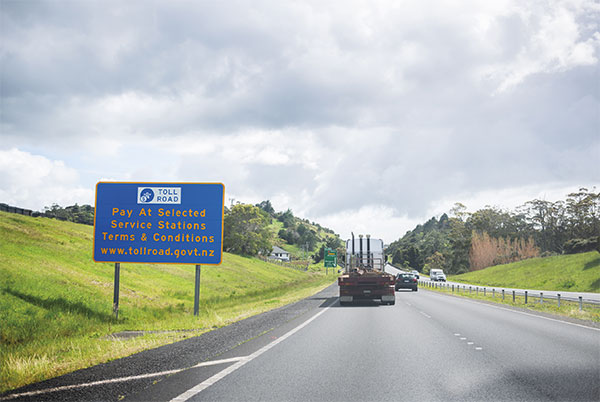
The Government’s decision to introduce tolling on the three new roads: Ōtaki to north of Levin, Takitimu North Link and Penlink, is the right thing to do to ensure funding is available for ongoing maintenance and renewals, says Infrastructure New Zealand chief executive Nick Leggett.
“When it comes to the stewardship of our roading infrastructure, building the road is only the beginning. Modern roads, like all assets, require ongoing investment in maintenance and upgrades, and tolling can be an important contributor to those,” says Leggett.
“I recognise that the debate around tolling and other forms of road pricing stirs strong opinions in New Zealand where we have very limited experience of it,” says Leggett. “Overseas, however, it is commonplace and contributes to the management and sustainability of modern, highly functional road networks.
“From a funding point of view, tolls won’t cover the entire cost of maintaining and renewing these roads, but they can make an important contribution. The proposed linking of toll fees to inflation is sensible too.
“Freight and commercial operators will be concerned that tolls do represent another cost. However, the benefits of safer, faster and more reliable routes far outweigh any additional cost to both operators and their customers,” says Leggett.
“The fact is that successive governments have been shielding road users from the true and rising costs our land transport infrastructure for many years. Road user charges (RUC), fuel excise duties, registration fees and general taxation no longer provide the level of funding required to maintain and improve our network. Adding tolling to these routes is a timely and necessary decision.”
The National Road Carriers (NRC) has also given support to the announcement.
“It is an unfortunate reality that our roading network is well below the standard expected to deliver safe, efficient, and productive movement of freight and that there is a significant shortfall in the revenue required to address this issue,” says Justin Tighe-Umbers, CEO, NRC.
NRC expects that this decision will result in a demonstrable lift in the speed of delivery and the quality of the network.
The freight industry is comfortable with heavy vehicles being required to use toll roads as a means of diverting traffic from unsuitable areas if the toll roads result in efficiency gains and the need to pass on the additional cost is reduced.
“We are playing catch up on both new roads and maintaining our existing ones, at the same time as having declining roading revenue returns from fuel duties. This obviously can’t go on so new ways of funding our future roads are needed, and that includes tools such as tolling, time of use and value capture,” says Tighe-Umbers.
“If New Zealanders want first world roads, then collectively, we need to be prepared to pay for them. Consideration does need to be given to how to appropriately charge freight to create better freight efficiencies and as long as the efficiencies exist, we believe transport operators and their customers will be prepared to pay for that.”
New Zealand needs quality infrastructure to support a growing economy and NRC supports initiatives that will accelerate the delivery of high-quality infrastructure.
“We also support the changes to the tolling infrastructure being undertaken by NZTA and will be wanting to see the cost of administering the system reduced,” adds Tighe-Umbers.
The NRC is described New Zealand’s progressive nationwide organisation representing supply chain companies. It represents 1500 members, who collectively operate 16,000 trucks throughout New Zealand. NRC supports its members with legal, financial, employment relations, health and safety, workplace relations, business and environmental advice. It advocates on behalf of members and works with central and local government on road transport infrastructure and regulations.