
A growing shortage of industrial-zoned land in the Auckland region could limit the scale of New Zealand’s big-box retail sector expansion, according to industry experts.
The warning comes as hundreds of millions of dollars are set to be invested in developing some of NZ’s largest retail infrastructure projects at a South Auckland site over the next two years.
Latest Stats NZ data show the total volume of seasonally adjusted retail sales was $24 billion, down 1.2% on the previous quarter.
While the retail sector remains flat in some regions, new projects under development are set to see Drury South Crossing become a distribution hub for some of NZ’s highest-profile retail brands.
Included among the new projects is a $100 million distribution centre for Briscoes expected to open in 2026 that will accommodate over 17,000 pallets of goods, compared to their current warehouse capacity of 4,500.
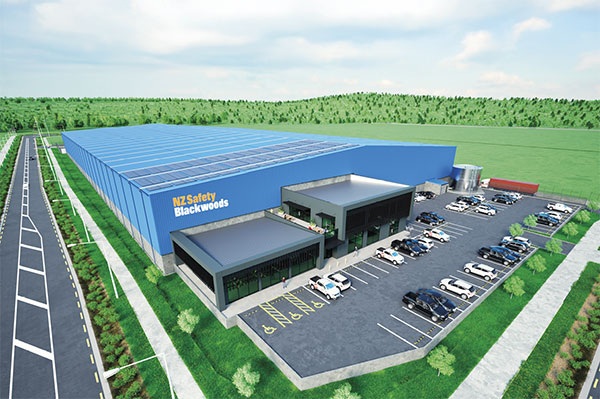
In addition, Wesfarmers-owned Bunnings and NZ Safety Blackwoods have recently committed to building some of their largest retail outlets at the development.
Stephen Hughes, CEO of Drury South Crossing – the country’s largest mixed-use property development, says over half of the second phase of their industrial development has now been sold to provide retail infrastructure as well as manufacturing and industrial.
He says there are very few sites remaining in the wider Auckland region zoned to accommodate the 20-30 metre height required for automated warehousing, also known as automatic storage and retrieval systems (ASRS).
“What we have seen in recent years is a move towards retailers operating on a scale that was previously unprecedented in New Zealand.
“The growth of e-commerce, the consumer expectation of rapid delivery times, and the need to drive cost efficiency in an increasingly competitive retail space are some of the primary drivers for the move towards ASRS.
“We know these automated systems cannot easily be retrofitted into existing buildings and need to be built from the ground up.
“This scale of these developments requires large greenfield sites of up to 2ha or more, with close access to road and rail transport. Across the Auckland region, there are now very few suitably positioned sites larger than 2ha remaining.
“What this could mean in the future are constraints on the size at which a retail distribution site could operate at – which as our population grows could impact the level of choice provided by new entrants to the sector,” he says.
Ben Stewart, associate director of property for Calder Stewart, says they are seeing a trend towards big box retailers consolidating their warehousing from multiple sites into one large automated facility to drive efficiency.
He says Calder Stewart has purchased 14ha at Drury South Crossing to develop for businesses looking to operate at scale including the 3.2ha Briscoes and 2.5ha NZ Safety Blackwoods facilities.
“We are seeing increasing demand for consolidation as retailers recognise the cost efficiencies from ASRS systems.
“The reality is that there is an inherent land supply issue on the horizon for businesses looking to move in this direction.
“Auckland’s capacity to grow is heavily constrained by its geography and the internal waterways in the region. At the same time, there is understandable reluctance from planners to rezone arable land.
“What this means is there are very few sites in this part of the North Island where this level of contiguous land can be purchased and developed, particularly with close connection to roading arterials and where the ground conditions are well understood.”